You are buckling a wriggling toddler into the back seat, the boot is full, and the snacks you packed are already half-eaten before you have left your own street. A road trip with a toddler is nothing like the road trips you took before children. The miles are the same, but everything else — the timing, the stops, the packing, the patience — runs on a small person’s schedule. The good news is that with the right plan, the drive itself can be the easy part. This guide walks you through planning a family road trip with toddlers, step by step, so you arrive with your sanity and your toddler’s good mood mostly intact.
Plan the Route Around Your Toddler, Not the Map
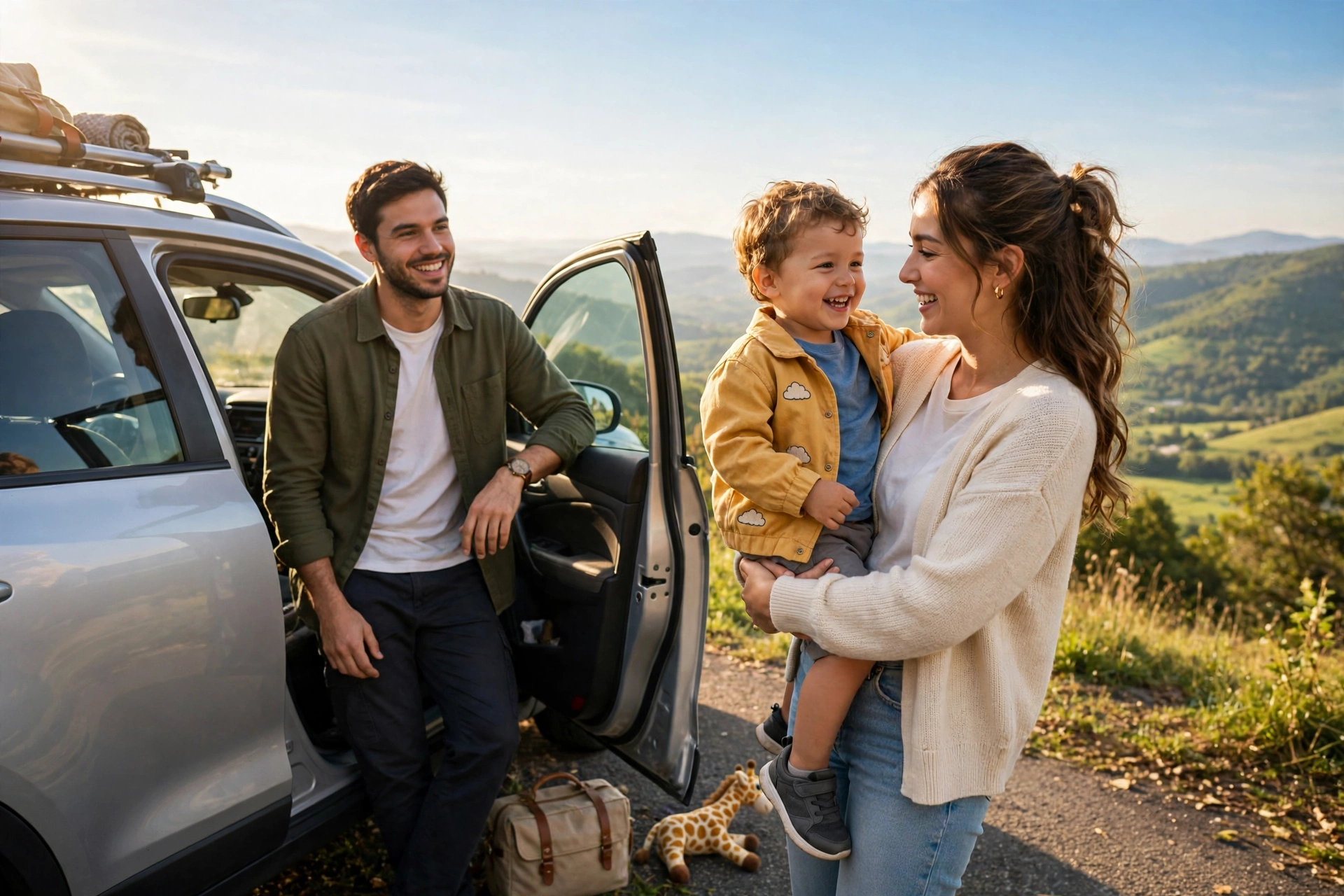
Adults plan road trips around distance. Parents of toddlers plan around attention spans. A good rule is to keep driving stretches to about two hours, then stop for at least twenty to thirty minutes. That is long enough for a toddler to run, climb, eat and reset, and short enough that the next stretch feels fresh instead of endless.
Before you leave, look at your route and mark real stops, not just towns on the map. Playgrounds, parks, rest areas with grass, and family-friendly cafés all work. A stop where your toddler can move freely is worth far more than a stop where they sit in a high chair staring at a menu.
Keep the daily driving total honest: two hundred miles with a toddler can feel longer than four hundred did before children. Plan for the trip to take about a third longer than the map says.
Time the Driving Around Sleep
The single most useful trick in toddler road travel is simple: drive when they sleep. Leave at nap time, or set off very early in the morning while they are still drowsy. A toddler who sleeps through the first two hours of driving gives you a calm, quiet start and saves their waking energy for the stops.
If your toddler naps once a day, build the whole day around that nap. Drive through it, then stop for lunch and play when they wake up.
Avoid driving through the late afternoon if you can — that is when toddlers are at their most tired — and if you must, plan a proper stop first: food, movement and a nappy change before the final stretch.
Check the Car Seat Before You Leave
Your toddler will spend hours in the car seat, so make it comfortable and safe before departure day. Check that the straps sit flat, the chest clip is at armpit level, and the seat is installed tightly enough that it moves less than an inch side to side at the belt path. A quick check the night before beats discovering a problem at a motorway service station.
If you are unsure about the fit, check the guidance from the US National Highway Traffic Safety Administration on car seat safety, and always follow your own car seat manual — it is the final word on how your specific seat should be installed.
Pack for the Toddler, Then for Yourself
Toddler packing has one rule: the things you need most must be within arm’s reach, not buried under luggage. Keep a small bag in the footwell or on the front seat with nappies, wipes, a change of clothes, snacks, water, a favourite toy and a comfort item. Everything else can go in the boot.
Pack twice as many nappies and wipes as you think you will need, plus one spare outfit for your toddler and one spare top for you — spills do not respect seating arrangements. A few small, new toys work better than one big one: hand them out one at a time when boredom strikes, and the novelty keeps a toddler busy far longer than a toy they already know.
If you want a tighter system for the whole family’s luggage, the same packing logic that helps you pack light for a week-long trip in one bag applies here: fewer, more versatile items, rolled instead of folded, and one bag per person so nothing gets lost in a shared pile.
Snacks Are a Strategy, Not an Afterthought
A hungry toddler in a car seat is a countdown to a meltdown. Pack snacks in small, separate containers rather than one big bag — a toddler who can hold their own pot of crackers or fruit feels in control, and you can hand out the next one when the first runs out.
Choose snacks that are low-mess and slow to eat: crackers, cheese cubes, banana, dry cereal, cucumber sticks. Avoid anything sticky, crumbly or likely to end up in the car seat straps. Keep water in a spill-proof cup, and bring more than you think you need.
Plan a proper meal stop around lunchtime rather than eating on the move — a toddler who eats sitting down, with space to wriggle, settles better for the afternoon drive.
Choose Stops That Burn Energy
Toddlers do not need attractions. They need space to run, something to climb, and something to look at. A playground beats a viewpoint, a park with ducks beats a shopping centre, and a beach beats both. When you pick stops, ask one question: can my toddler move here? If you are passing through an unfamiliar town, it helps to know how to find free things to do in a new city before you arrive, so a stop becomes a small adventure instead of a parking-lot wait.
Keep the Budget Honest
A family road trip with a toddler costs more than the same trip did before children, because you stop more, eat out more and sometimes pay for the convenient option instead of the cheap one. Set a daily budget before you leave and track fuel, food and stops as you go — the small costs are the ones that creep up. A realistic budget for a weekend road trip on a budget starts with the same habit: decide the spending limit first, then let the plan fit inside it.
Protect the Sleep Routine at Overnight Stops
If your trip runs over more than one day, keep the bedtime routine familiar: bring their usual bedding, their comfort toy and the bedtime book you always read. Try to arrive at your overnight stop with at least an hour of daylight left. That gives your toddler time to explore the room, burn off the last of the day’s energy and wind down before bed, instead of arriving in the dark to a strange room and a tired child.
When Things Go Wrong
Something will go wrong — a missed nap, a sick toddler, an hour of crying for reasons you will never know. Build slack into the plan: an extra hour of buffer, a backup stop, and permission to abandon the schedule.
For motion sickness, keep the car cool, stop for fresh air, and avoid screens and books while moving. If sickness is a repeated problem, talk to your child’s doctor before the trip rather than guessing at remedies.
FAQs
How long can a toddler sit in a car seat on a road trip?
Aim for no more than two hours of continuous driving, then take a proper break of at least twenty to thirty minutes. Toddlers need to move, stretch and eat regularly, and long stretches in a car seat leave them stiff and frustrated.
What is the best time of day to drive with a toddler?
Drive during nap time or very early in the morning, when your toddler is most likely to sleep. Avoid the late afternoon if you can — that is when toddlers are at their most tired and least patient.
How do I keep a toddler entertained in the car?
Rotate small, new toys one at a time, play songs they can join in with, and talk about what you can see out of the window. Save screens for the hardest stretch of the day rather than using them first, so you still have something in reserve.
Final Thoughts
Planning a family road trip with toddlers is less about the perfect itinerary and more about respecting a small person’s limits: short driving stretches, real stops, good snacks, protected sleep and a schedule with room to bend. Get those right and the trip stops being something to survive and starts being something your toddler will actually enjoy — which is the whole point of going. Pack the bag, check the car seat, leave at nap time.