You are standing in front of an open suitcase the night before a week-long trip, and somehow the pile of clothes on the bed is already bigger than the bag. You add one more shirt “just in case,” then a second pair of shoes, then a jacket you will probably never wear. There is a better way. With one bag, a small capsule wardrobe, and a packing method that actually works, seven days of travel fits in a single carry-on, and you will not miss the things you left behind.
Start With the Bag, Not the Clothes
Most people pack badly because they start with the wrong container. A huge suitcase invites you to fill it; a single carry-on forces you to choose. Pick a bag you can lift into an overhead bin without help and carry comfortably for ten minutes — that is your real limit, not the airline’s. A soft-sided bag around 35 to 45 litres works well for a week for most travellers, and packing cubes help keep it organised.
Before you pack a single item, lay out what you think you need on the bed, then remove a third of it. Almost every traveller overpacks the same way: too many tops and too many “just in case” items. If an item does not go with at least two other things you are bringing, it stays home.
Build a One-Week Capsule Wardrobe
The secret to a week in one bag is a capsule wardrobe: a small set of clothes in matching colours that mix and match. Choose two neutral colours — navy and grey, or black and olive — plus one accent colour, and build everything around them. Every top should work with every bottom. That one rule turns a handful of items into a week’s worth of different outfits.
Think in outfits, not items. Lay each day’s outfit out together before it goes in the bag. If you cannot picture yourself wearing a combination, it does not earn its place. And plan for the trip you are actually taking: a week of city walking needs comfortable shoes and layers; a beach week needs swimwear and sun protection. Pack for the days you have planned, not for every imagined scenario.
Use a Packing Method That Saves Real Space
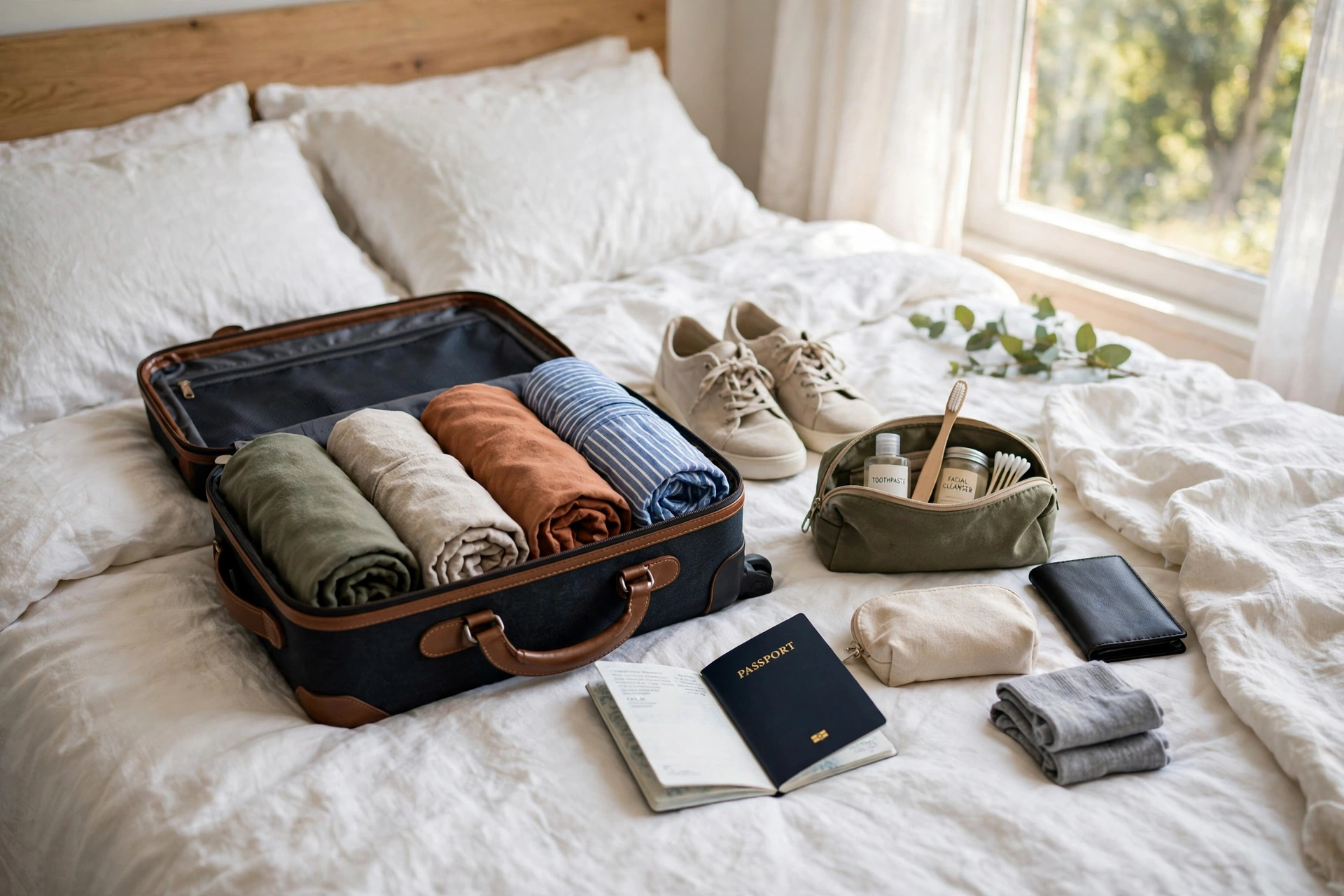
Rolling clothes is not a travel myth — rolled items take up less space than folded stacks and crease less, especially for soft fabrics such as T-shirts and knitwear. Roll each item tightly, then place the rolls side by side like files in a drawer rather than stacking them in layers. You can see everything at a glance.
For structured items such as shirts, fold them flat and lay them on top of the rolls. Packing cubes earn their keep here — one cube for tops, one for bottoms, one for underwear and socks — because they compress soft clothes and stop the bag turning into a jumble after the first day. Heavy items go at the bottom, near the wheels or the back panel, so the bag stays balanced when you carry it.
Fill the dead space. Stuff socks inside shoes, tuck belts around the edges of the bag, and slide flat items such as a book down the side. A bag that looks full often still has room in its corners — use it before you declare it full.
Keep Toiletries and Tech Small
Toiletries are where light packers quietly lose the battle. A full-size shampoo bottle and three kinds of cream can fill a quarter of a carry-on. Decant what you need into small travel bottles instead of carrying full sizes, and leave anything your hotel provides — shampoo, soap, and often a hairdryer — at home. If you are flying with hand luggage only, remember the liquids rule for cabin bags and keep liquids in one clear, resealable bag; check your airline’s exact limits before you travel, since they can differ.
Tech deserves the same discipline. One charging cable that works for your phone and your other devices, a compact power bank, and one pair of earphones cover most trips. A laptop is worth its weight only if you will genuinely work on it. Pack cables in a small pouch so they do not tangle through the whole bag, and keep the power bank where you can reach it easily.
A Simple Packing List for Seven Days
Use this list as a starting point and adjust it for your weather and plans:
- 3 bottoms in matching neutrals
- 5 tops that all work with those bottoms
- 1 light layer and 1 rain or outer layer
- 7 sets of underwear and socks
- 1 set of sleepwear
- 2 pairs of shoes in total, the heavier pair worn while travelling
- Toiletries in travel sizes, in one small bag
- Phone, charger, power bank, earphones
- Passport or ID, payment card, and booking confirmations
- A small laundry bag to separate worn clothes
Read the list twice before you zip the bag. Anything that is not on it needs a reason to be there. And keep one small gap in the bag — a souvenir or a book you pick up will need that space on the way back.
Wear Your Heaviest Items
The easiest way to make a bag lighter is to wear the weight instead of packing it. Put on your heaviest shoes, your bulkiest jacket, and your heaviest trousers for the journey. Layers are your friend on travel days: a jacket over a sweater over a shirt keeps you warm on a cold plane and frees a surprising amount of space in the bag. You can take layers off once you arrive.
This is also where budget travel and light packing meet. Travelling with one bag usually means no checked-bag fee, no wait at the carousel, and a faster exit from the airport. If you are watching costs on a trip, the same mindset helps across the board — for example, planning a weekend road trip on a budget starts with the same idea: decide what you really need, then spend only on what adds real value.
What to Leave Behind
The “just in case” pile is the enemy of one-bag travel. Leave the extra shoes — two pairs are enough for a week. Leave the full-size toiletries, the extra book, the second jacket, and the outfit for an event you have not actually planned. Most destinations have shops, laundries, and pharmacies; almost anything you genuinely need can be bought or washed where you are. A small laundry stop mid-trip costs far less than dragging a heavy bag for seven days.
FAQs
Can one bag really hold a week’s clothes?
Yes, for most trips in mild weather. The capsule wardrobe and packing list above fit in a 35 to 45 litre carry-on with packing cubes. Very cold weather is the exception: heavy coats and boots may need a bigger bag.
What if I need something I did not pack?
Buy it or wash what you have. Laundries, pharmacies, and shops exist in almost every destination, and a mid-trip wash is cheaper and easier than carrying a week’s worth of spares.
How do I keep the bag organised for a whole week?
Use packing cubes or zip bags by category, keep a separate laundry bag for worn clothes, and repack for two minutes each night. The habit takes almost no time and stops the bag turning into a jumble by day three.
Final Thoughts
Packing light for a week in one bag is not about sacrifice — it is about choosing well. Pick the right bag, build a small capsule wardrobe in matching colours, roll what you can, keep toiletries and tech small, and wear your heaviest items on the journey. Leave the “just in case” pile at home, and trust that anything you truly need can be found or washed where you are going. And when you arrive somewhere new, a light bag lets you explore freely — knowing how to find free things to do in a new city makes a flexible trip even better, because you can follow what you discover instead of following a heavy suitcase.
Your next trip will feel different from the first morning: one bag, both hands free, and nothing to drag. Pack it once, pack it well, and enjoy travelling light.