Picture the scene: you are seven hours into a ten-hour flight, somewhere over an ocean you cannot see, and your five-year-old has just announced — loudly — that she is bored of everything. The tablet battery is dead, the crayons have rolled under the seat, and the passenger in front of you has reclined into your lap. Long flights with children feel daunting because so much is out of your control. But most of the stress comes from a handful of predictable moments, and every one of them can be planned for. This guide walks through what actually works — before takeoff, in the air, and when the plan falls apart anyway.
Start Before You Leave the House
The flight starts at home, a day or two before you leave. Tell your children what will happen, in the order it will happen, using words they understand: first the car, then the big building, then the long wait, then the plane, then the sky. A simple timeline — even drawn on a piece of paper — can prevent half the questions that usually arrive at the gate.
Let older children help pack their own small bag. Choosing their own snacks and toys gives them a sense of control, and they are far more likely to play with things they picked themselves. For toddlers, keeping their routine familiar — same snacks, same comfort toy, same bedtime story — matters more than any clever travel gadget, whether you are planning a family road trip with toddlers or boarding a ten-hour flight.
Keep bedtime normal the night before. It is tempting to keep children up late so they will sleep on the plane, but an overtired child rarely sleeps well in a noisy cabin. A rested child boards calmer, eats better, and recovers faster from the inevitable wobble at hour five.
Pick the Right Seats and the Right Flight
Seat choice shapes the whole flight. If you can, book a window seat for the child and the middle seat for yourself. The window gives a small child something to lean on and look at, and it keeps them contained instead of climbing into the aisle every ten minutes.
If you are travelling with a baby, ask the airline about bulkhead rows and bassinets when you book, not at the airport. Bassinets are usually limited to infants under a certain weight and age, and the rules and availability differ between airlines, so confirm early and get it noted on the booking.
Flight timing matters too. An overnight flight sounds ideal because children might sleep, but it only works if your child can actually fall asleep sitting up in a strange place. If your child is a poor sleeper, a daytime flight — where you can keep them busy and let them crash properly at the hotel — is often the calmer choice. Either way, book seats together as early as you can. Do not rely on fellow passengers to swap.
Pack a Carry-On That Actually Works
Your carry-on is your entire world for the next ten hours, so pack it like one. Give each child a small bag they can carry themselves, filled with a few new, small things rather than one big toy: sticker books, a colouring pad, a small puzzle, a card game.
Pack a full change of clothes for every child, and one spare top for yourself. Spills, air sickness and toilet accidents are not a question of if but when, and changing into dry clothes resets a miserable child faster than anything else. Add wet wipes, a couple of plastic bags for rubbish or soiled clothes, and child-sized headphones — adult ones slip off small heads and hurt small ears.
Snacks deserve their own pouch, within easy reach. Pack more than you think you need: crackers, dried fruit, cereal bars, something chewy for takeoff. The same discipline that helps you pack light for a week-long trip in one bag applies here — one versatile bag, everything with a purpose, nothing packed “just in case” that you will never touch.
Food, Water and Ear Pressure
Plane meals arrive late and rarely match a child’s taste, so feed children properly before boarding or bring food you know they will eat.
Keep them drinking. Cabin air is dry, and children get dehydrated faster than adults without noticing. Offer water regularly rather than waiting for them to ask. Buy water after security, or ask the crew for a bottle once you are seated.
Ear pressure is the other classic problem. Swallowing and chewing help equalise the pressure in the ears, so offer a drink or a chewy snack during takeoff and landing. For babies, feeding during those moments serves the same purpose.
Help Them Sleep on the Plane
Sleep on a plane is rarely deep, but even an hour of dozing changes the second half of the flight. Bring the things your child associates with bedtime: their small pillow, a light blanket, the comfort toy they sleep with at home. Change them into pyjamas before the cabin lights dim — the ritual itself signals that it is sleep time.
Run a miniature version of the bedtime routine: teeth brushed, story read, lights low, screens off. Do not force sleep — a child who lies quietly with eyes closed, listening to an audiobook, is still resting, and that rest counts.
Screen Time Without the Guilt
Long flights are not the day to fight the screen battle. Download everything before you leave home — films, episodes, games, audiobooks — because plane wifi is slow, expensive, or simply not working.
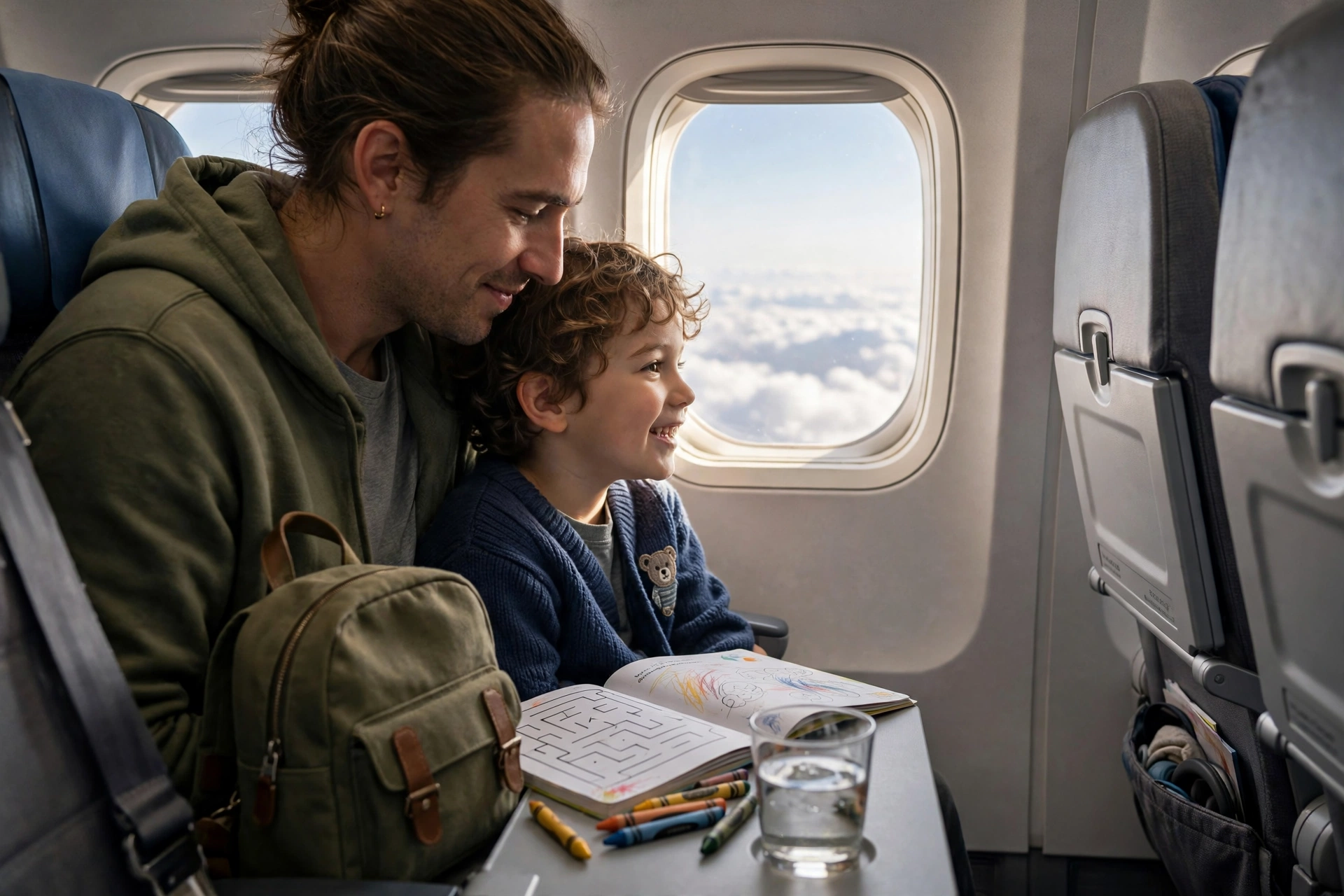
Still, keep screen-free backups in reach. A sticker book, a drawing pad, a simple card game, or a window-spotting game can fill the gaps when the battery dies or the screen stops holding their attention. The best entertainment plan is a mix: screens for the hard stretches, hands-on things for the rest.
When the Meltdown Comes Anyway
Even with perfect planning, there will be a moment when your child cries, shouts, or refuses everything. When it comes, stay calm and lower your voice — children take their emotional cue from you, and a quiet parent is more settling than a loud one.
Take a walk together down the aisle. Movement breaks the spiral for toddlers especially, and a change of scene — looking at the galley, waving at the crew, stretching legs — often ends the meltdown faster than any negotiation. Offer a snack, offer water, offer the one wrapped surprise you saved for emergencies.
And stop worrying about the other passengers. Most of them have been exactly where you are, and a brief apology is enough. You are not a bad parent because your child cried on a plane — you are a parent on a plane, which is hard for everyone.
FAQ: Flying With Kids on Long Flights
What age is hardest for long-haul flights?
Most parents find toddlers aged one to three the hardest, because they want to move and cannot be reasoned with yet. Plan for regular aisle walks, bring more snacks than you think you need, and accept that you will spend much of the flight on the move.
Can I bring baby food and milk through security?
In most places, baby food, formula and breast milk are allowed through security in reasonable quantities, but the rules and limits vary by airport and country. Check your departure airport’s rules before you travel.
Should I book a separate seat for my under-two?
Many airlines allow children under two to travel on a lap, but a separate seat — with an approved car seat — gives the child their own space and often a calmer flight for everyone. Check your airline’s policy and prices when you book, since both vary widely.
Final Thoughts
Travelling with kids on a long haul flight is never effortless, but it is very doable. The families who arrive calm are rarely the ones with the most expensive gear — they are the ones who prepared the boring parts in advance: seats booked together, snacks within reach, entertainment downloaded, and a plan for the moment it all goes wrong. Do that work before you leave, and the flight becomes what it should be: the slightly uncomfortable beginning of a trip your children will remember for the right reasons.