You step off the train into a square you have only seen in photos, and within ninety seconds someone is offering you a “free” bracelet, a taxi driver is quoting triple the normal fare, and a friendly stranger is steering you toward his cousin’s restaurant. None of it is dangerous — all of it is designed to separate you from your money before you have even found your hotel.
That is what a tourist trap really is — not a scam in the criminal sense, but any place, price, or offer that exists mainly to charge visitors more for less. Most traps are easy to spot once you know the pattern, and this guide shows you how.
What Counts as a Tourist Trap?
A tourist trap usually has three signs. First, it sits right next to a famous landmark, where foot traffic is guaranteed. Second, its prices are vague — no menu outside, no fare posted, no ticket price until you ask. Third, it sells the idea of the place rather than the place itself: a photo with a costumed character, a “traditional” dinner show, a souvenir made somewhere else entirely. The question is always whether you are paying a fair price for what you get, and whether a better version exists two streets away.
Research Before You Leave Home
Most traps work because the traveler arrives unprepared. An hour of research before your trip prevents most of them — including a quick check of your government’s travel advisories, such as the U.S. State Department’s advisories, for current warnings by country.
- Learn the normal prices. Before you land, look up the airport taxi fare, a metro ticket, and what a normal lunch costs. When you know the baseline, an inflated price stands out instantly.
- Read recent reviews. A restaurant that was charming in 2019 may have changed owners twice since then. Sort reviews by newest and look for complaints about prices, pressure, or surprise charges.
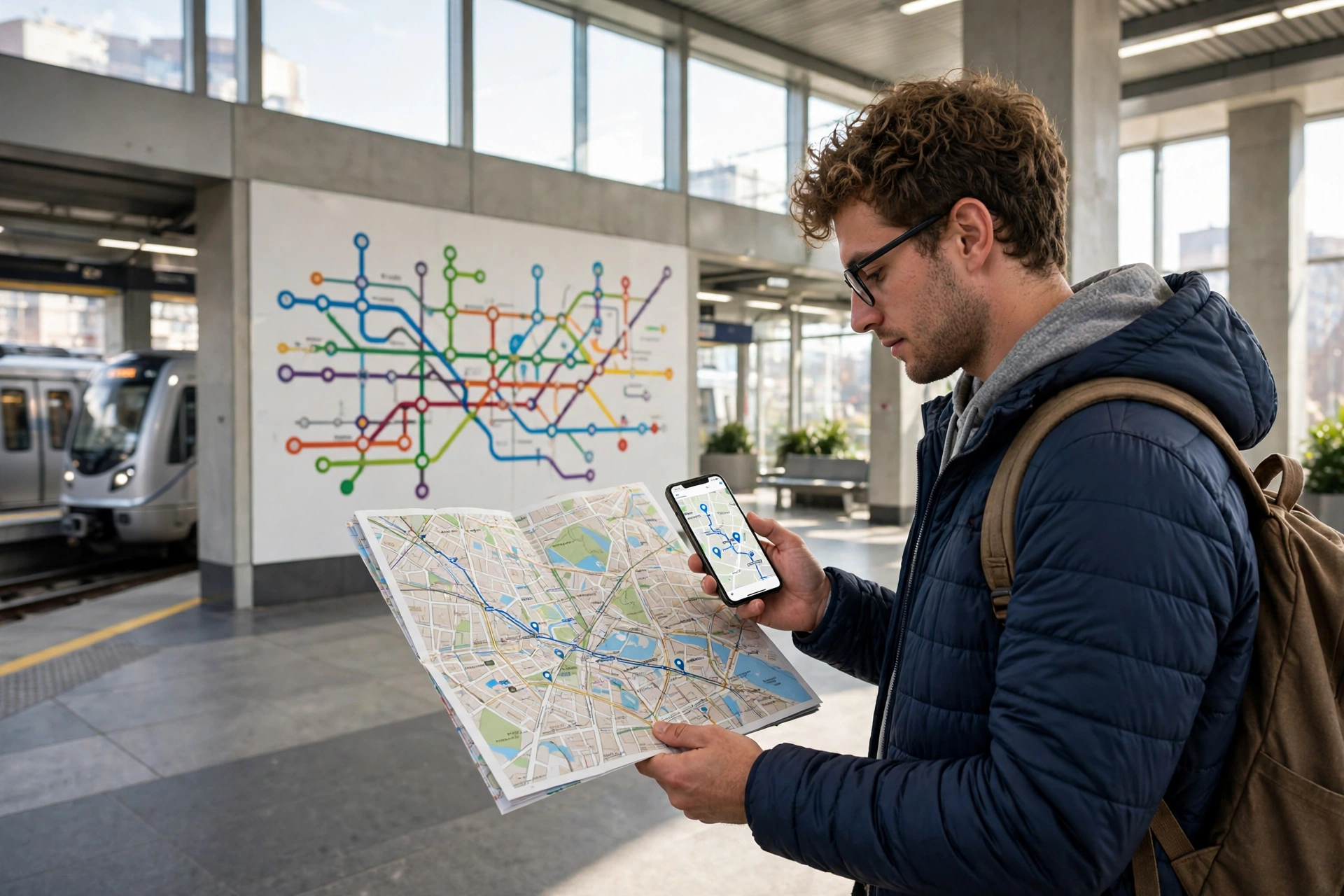
- Save offline maps. Download the city map in your phone before you arrive. A traveler walking with purpose attracts far less unwanted “help.”
Watch the Prices: Menus, Tickets, and “Special Deals”
The oldest trap in travel is the price that appears only after you have sat down, eaten, or boarded. Simple rule: if you cannot see the price before you commit, do not commit.
At restaurants, check the menu outside before sitting down — if none is displayed, walk on. Watch for the “special menu” handed to tourists while locals get a different one; a second menu is almost always a second, higher price list. Ask for the bill item by item if anything looks off, and never pay a “service charge” that was never mentioned.
For attractions, buy tickets from the official website or the official ticket office, not from sellers standing outside the entrance. Third-party sellers add a markup and sometimes sell tickets that do not work. Check whether the venue sells timed tickets online — you will often skip the queue and pay less.
Transport Traps: Taxis, Rides, and Rentals
Transport is where first-time visitors lose the most money — tired, carrying bags, and just wanting to reach the hotel.
- Use the meter or agree the fare first. If the driver refuses the meter, walk away. In cities where ride-hailing apps work, use them — the price is fixed before the car arrives.
- Watch the route. A driver taking the “scenic route” is taking the expensive route. Follow along on your own map; a driver who notices you watching the route rarely tries it.
Tours, Guides, and “Free” Offers
Guided tours can be wonderful — a good local guide is worth every cent. The trap versions are the ones that find you: the person at the station offering a “free walking tour” that ends at a shop where you are expected to buy something, or the “official guide” with no badge and no company name. Book through your hotel, a reputable platform, or the tourist information office, and read what is included — a cheap tour that stops at three commission-paying shops is not cheaper than a pricier one that spends its time at the sights. And remember: nothing in travel is really free. A free bracelet, a free rose, a free photo — each one comes with a price that appears the moment you accept it. A polite “no thank you” and keep walking is the whole technique.
Money Traps: Currency, Cards, and ATMs
Money traps abroad are quiet ones — a bad exchange rate here, a hidden fee there.
- Never exchange money at the airport or hotel — their rates are the worst in the city. Use an ATM inside a bank branch instead, and decline “dynamic currency conversion” (being charged in your home currency), because its rate is almost always worse.
- Carry small bills. Vendors who “have no change” for a large note are often hoping you will give up and walk away. Small denominations keep every transaction exact.
Eating and Shopping Like a Local
The simplest rule in travel eating is also the most reliable: eat where the locals eat. A restaurant full of residents, a little way from the main square, with a menu in the local language, will almost always be cheaper and better than the place with a photo menu in six languages.
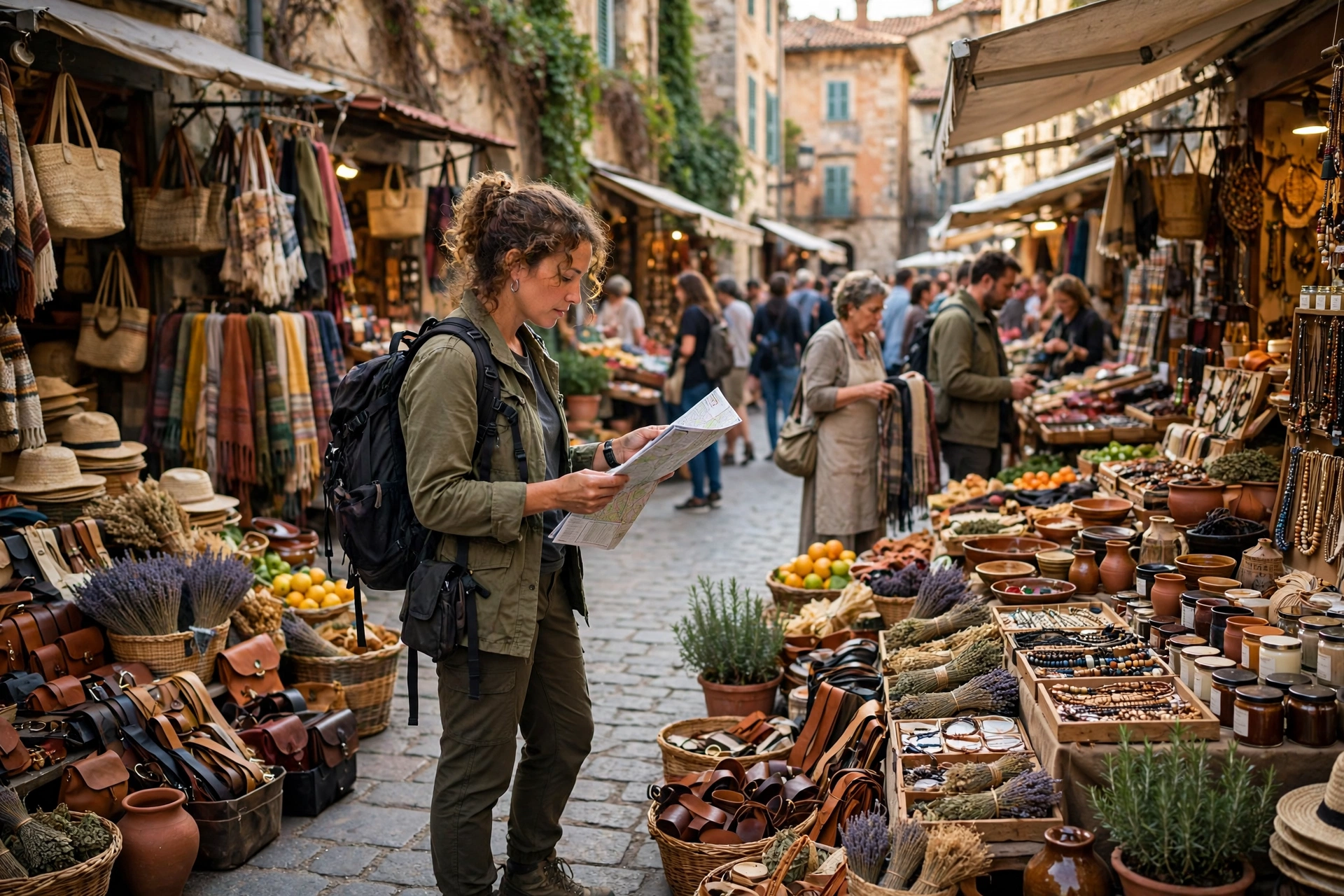
The same rule works for shopping. Souvenir stalls clustered around landmarks sell the same mass-produced items at the highest prices. Markets in residential neighborhoods give you the real thing at a real price — and you can find free things to do in a new city that show you more of the place than any gift shop ever will. Where bargaining is normal, check prices at two or three stalls first to learn the fair range.
Stay Safe Without Staying Suspicious
Most tourist traps are about money, not safety, but a few street scams are worth knowing. The pattern is almost always the same: someone creates a distraction — a petition to sign, a spill on your jacket — while someone else reaches for your bag or wallet.
The defense is boring and it works: keep your bag in front of you in crowds, do not stop for strangers who approach you on the street, and never hand your phone or camera to someone you have just met. You do not need to be suspicious of everyone — most people you meet while traveling are genuinely kind. You only need to be alert in the few places where crowds and confusion make theft easy: stations, markets, and the square outside the famous sight.
What to Do Instead
Avoiding traps is only half the job — fill the time you save with things actually worth it.
- Walk two or three streets away from any landmark before choosing a place to eat.
- Ask your hotel staff or host where they eat and what they do on a day off.
- Plan your spending before you go — if you plan a weekend road trip on a budget, the same habit of setting a daily limit and tracking it keeps an international trip on track too.
FAQ
Are tourist traps dangerous?
Usually not. Most are simply overpriced — a bad meal, an expensive taxi, a souvenir at five times its value. The real risk is distraction theft in crowded areas, which is why keeping your bag in front of you matters more than worrying about any single shop.
How can I tell if a restaurant is a tourist trap?
It sits on the main square or beside a landmark, has a tout outside, shows a photo menu in many languages, and has no locals eating there. If no menu is displayed outside, or prices appear only after you sit down, walk on.
Is it rude to refuse a “free” gift from a street vendor?
No. A firm, polite “no thank you” and keep walking is the normal response everywhere — accepting the item is what creates the problem, because the price is demanded afterward.
Final Thoughts
Tourist traps work on one thing: the gap between what you know and what the place actually costs. Close that gap with a little research, a habit of checking prices before you commit, and the confidence to walk away from anything pushy — and the traps mostly disappear. The real city is usually two streets away, cheaper, quieter, and far more interesting than the version sold at the entrance.