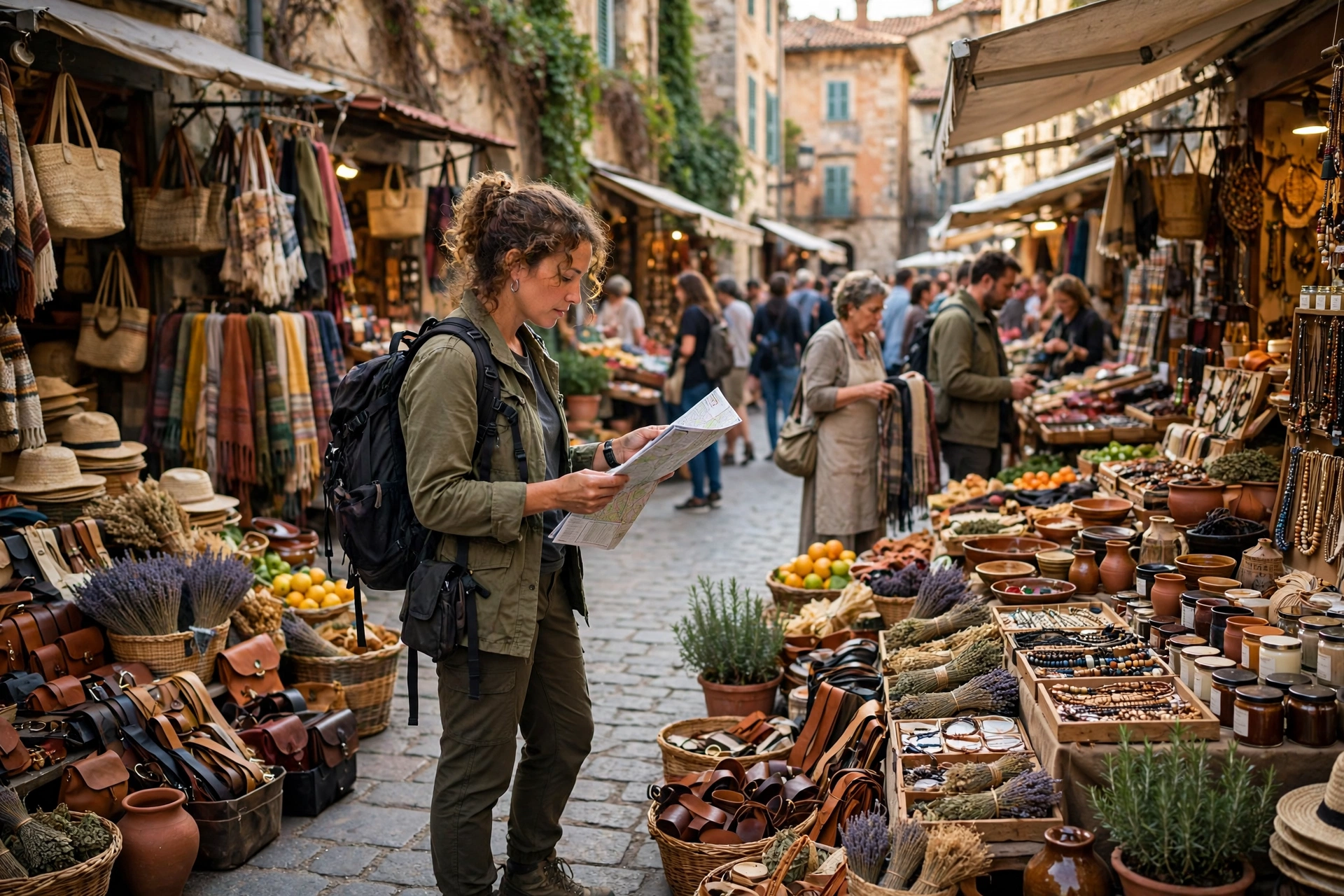
You step off the train into a station you have never seen before, a folded list of twelve places in your hand and a metro map that looks like a bowl of coloured spaghetti. The museum is on the blue line, the market is on the green line, and the viewpoint you wanted for sunset is a forty-minute bus ride in the opposite direction. By the time you work it out, half the morning is gone.
That is what happens when an itinerary is built around a wish list instead of the transport that connects it. Plan around the network instead, and the city starts working for you. This guide shows you how to plan a trip itinerary around public transport, so your days flow instead of zigzagging across town.
Start With the Map, Not the List
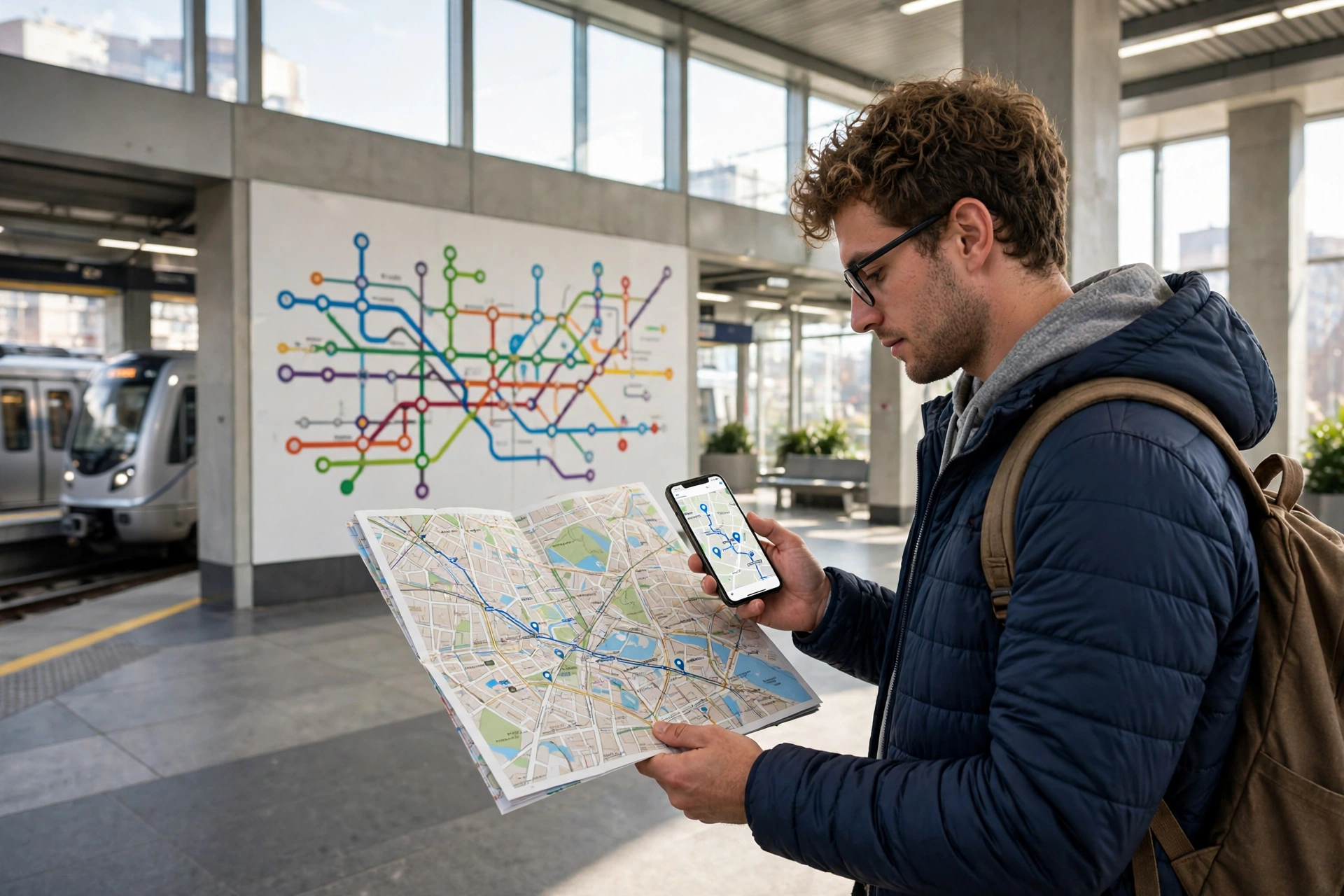
Most itineraries fail before the trip starts, because they are ordered by excitement rather than geography — your favourite sight first, then the second, even if the two sit at opposite ends of the city. Plot everything on a map before you decide the order.
- Pin every place you want to see on a map app and save them in one list, so you can see the real spread at a glance.
- Note the nearest station for each pin — metro, tram or bus stop — and which line serves it.
- Group the pins into clusters that share a line or a neighbourhood. One cluster becomes one half-day; two clusters make a full day.
- Order each cluster by walking distance, not by how much you want to see each place. Start at the stop furthest from your hotel and work your way back.
Learn How the System Works Before You Land
Every city’s transport system has its own rules, and assuming it works like the one back home is how travelers waste money and miss trains. Spend twenty minutes learning the basics before you arrive.
- Ticket types and zones. Some cities charge one flat fare, others charge by zone or distance. Know which ticket covers your trips and whether it needs validating before you board.
- How to pay. Many large cities now accept contactless bank cards or phone wallets at the gate, but plenty still need a local travel card from a station machine or kiosk. Check before you land, and keep small change handy for buses that do not take cards.
- Operating hours. Metros often stop around midnight and start again at 5 or 6 in the morning. Night buses may replace them, but with longer waits — check the last train time for every evening you plan to be out late.
- The right app. Download the city’s official transit app, and check whether Google Maps or Citymapper covers live departures there. For routes between towns, Rome2Rio shows the train, bus and ferry combinations in one search.
Build Each Day Around One Line or Area
With your clusters mapped, give each day a theme tied to the network: one metro line, one tram route, or one neighbourhood. One line per day keeps transfers low — you ride out, see the sights, and ride back.
Three or four major stops a day is realistic. A fifth stop works only if it is small — a viewpoint, a short walk, a coffee — and sits on the same line. If a day needs three transfers, rebuild it: move one sight to a day where it fits better. Many low-cost stops are already on your route — you can find free things to do in a new city like parks, viewpoints and markets a short metro ride from the centre, and slot them in without an extra journey.
Time Your Journeys Realistically
A timetable says a ride takes twelve minutes. Your real journey takes much longer, so count the whole door-to-door trip: the walk to the station, the wait, the ride, each transfer, and the walk from the final stop to the sight.
- Add five to ten minutes for every transfer — large interchange stations can take longer to cross than the ride itself.
- Check the frequency, not just the route. A metro every four minutes forgives a missed train; a bus every thirty minutes does not.
- Never plan a tight connection before a timed ticket. If your museum entry is at 10:00, aim to arrive by 9:30. A delayed train should cost you a coffee, not an entry slot.
- Respect rush hour. Buses in city traffic can take twice as long at 8:30 in the morning as they do at noon — use the metro or tram for time-critical journeys.
- Know the last departure. Note the last train or bus home each evening, especially before a day trip — missing it turns a cheap day out into an expensive taxi ride.
Always Have a Backup Plan
Public transport is reliable until the day it is not. A line closes for engineering works, a strike is announced, or a bus simply never comes. A good itinerary survives that day.
For each day, note one alternative: the parallel bus or tram route to the same area, or a second line to the same station. Save an offline map on your phone before you leave the hotel, so a dead signal in a metro tunnel does not strand you. Check the operator’s service alerts each morning — a two-minute check beats discovering a closure at the station. Keep a taxi or ride-hailing app as the last resort: for the evening when you are tired and the last train has gone, not for every ten-minute walk.
Use Trains and Buses for Day Trips
Day trips work the same way at a bigger scale: one line out, one line back, sights clustered around the arrival station. Regional trains are usually fastest, and many cities sell a regional day ticket covering the train and the local buses at the other end.
Check the return times before you leave in the morning — the last train back matters more than the first train out. The French Riviera is a classic example: several coastal towns sit less than an hour from Nice by train, and our guide to places to visit near Nice by train shows how a single line can carry a whole day of sightseeing.
Save Money on Fares
Transit passes only save money if they match how much you actually ride, so do the maths before buying.
- Count your rides per day. In many cities a day pass pays for itself after three or four rides. If you are only making two journeys a day, single tickets are usually cheaper.
- Compare a multi-day pass against single tickets for the whole trip, and check whether it covers the airport transfer — often sold separately.
- Skip tourist passes that bundle attractions unless you will visit the bundled sights — a pass is poor value if half its attractions never make it into your plan.
- Check for discounts you qualify for — many systems offer reduced fares for children, students and seniors, and some cities let children travel free with a paying adult.
FAQ
Is it safe to use public transport at night?
In most major cities, yes — metros and trams stay busy well into the evening. Stick to well-lit main stations, keep your bag in front of you in crowds, and check the last departure before you head out.
Can I just tap my bank card, or do I need a travel card?
It depends on the city. Many large networks now accept contactless cards and phone wallets, but some still require a local travel card — check the official transit website before you travel, and buy the card at the airport station on arrival.
What if the metro closes early on my last night?
Plan dinner near your hotel that evening, or budget for a taxi home. Night buses often run the main routes after the metro stops, but they are slower and less frequent — check the timetable first.
Final Thoughts
A trip planned around public transport is not a restricted trip — it is a calmer one. You see the city the way its residents do, spend your money on experiences instead of taxis, and stop losing mornings to zigzag journeys. Map the network first, cluster your sights by line, time everything honestly, and keep one backup in your pocket.