You turn a corner in the early morning and the street is empty, the rooftops are dusted white, and the only sound is your own footsteps on the cold stone. Winter in Kyoto is the city at its quietest and most beautiful — the crowds of spring and autumn are gone, and the temples, gardens and old streets belong, for a little while, to the people who are there.
This guide covers the places to visit in Kyoto during winter, from snow-dusted temples to warm food and quiet walks, so you can plan a cold-season trip that makes the most of the season instead of just enduring it.
What Is Kyoto Like in Winter?
Winter in Kyoto runs roughly from December to February. Days are cold and crisp, often with clear blue skies, and snow falls a handful of times each season rather than every week — when it does, the temples look extraordinary, but you cannot count on it. The upside is real: smaller crowds, cheaper hotels than in cherry blossom or autumn-leaf season, and a calm, unhurried feel across the city.
Dress warmly, wear shoes with good grip for icy steps at temples, and plan your days around the short daylight — the sun sets early, so start sightseeing soon after breakfast.
Kinkaku-ji: The Golden Pavilion in Snow
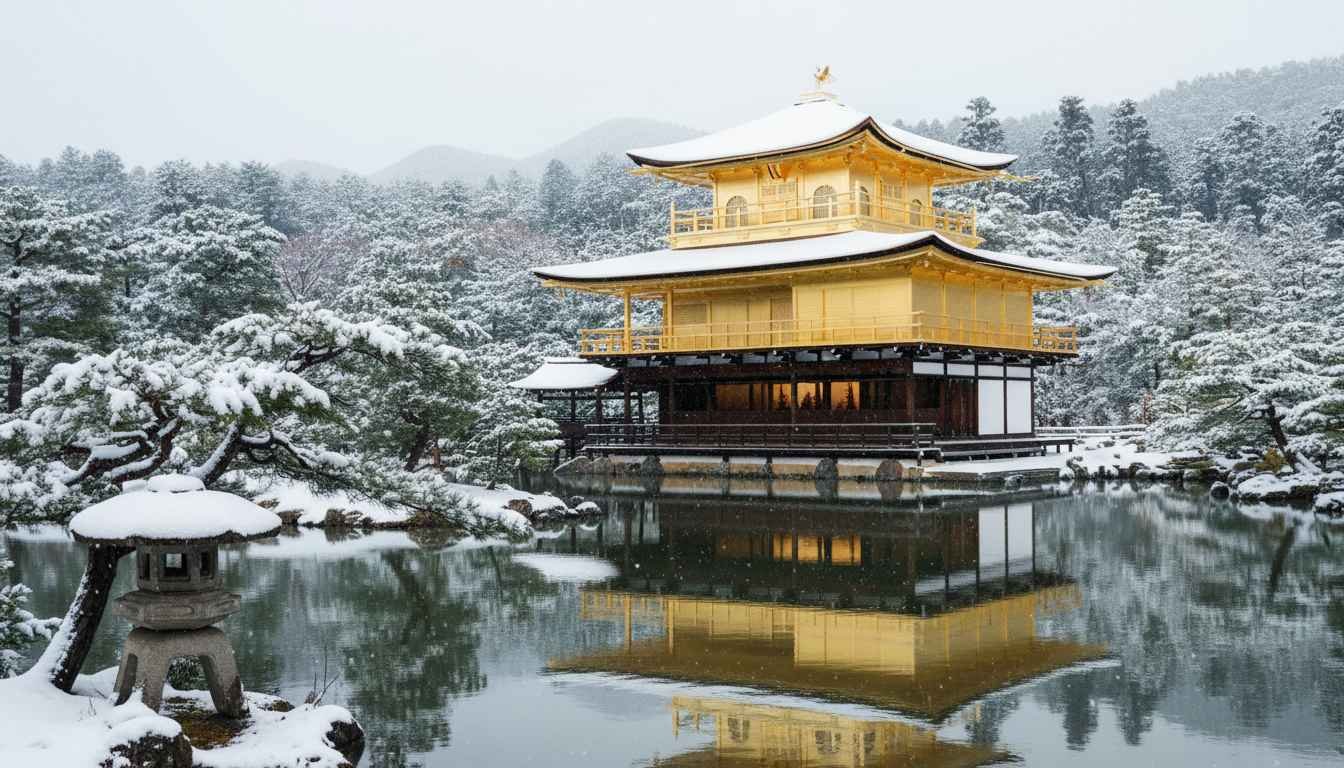
Kinkaku-ji, the Golden Pavilion, is Kyoto’s most photographed temple in any season, and on a snowy morning it is at its best — the gold leaf against white roofs and a still pond is a scene people travel across the world to see. Because snow is not guaranteed, treat it as a bonus: even on a clear cold day, the low winter light makes the pavilion glow. Arrive at opening time to walk the garden path before the tour groups arrive.
Fushimi Inari-taisha: The Thousand Torii Gates
Fushimi Inari-taisha is famous for its thousands of vermilion torii gates winding up the mountainside, and winter is one of the best times to walk them. The crowds thin out quickly beyond the first stretch, and the higher trails are quiet, with views back over the city. The full loop to the summit takes a couple of hours and involves steps, so take it slowly and wear comfortable shoes. The shrine is open around the clock, so an early morning visit is easy to arrange.
Arashiyama Bamboo Grove and Togetsukyo Bridge
The Arashiyama Bamboo Grove is a short walk through towering bamboo that feels completely different in winter — cold, still, and much less crowded than in spring. Go early in the morning for the quietest experience. Nearby, the Togetsukyo Bridge crosses the river with forested hills on either side, and the view is especially good on a clear winter day. If you are visiting Japan in spring instead, the same city looks very different in bloom — see our guide to places to visit in Japan for cherry blossom for that season.
Kiyomizu-dera and the Higashiyama Streets
Kiyomizu-dera Temple sits on a hillside above the old streets of Higashiyama, and its wooden stage looks out over the city — a view that is lovely in winter light. The streets below, lined with traditional wooden shops selling sweets, pickles and crafts, are at their most atmospheric when they are quiet. Walk slowly, stop for a warm drink, and take the back lanes rather than the main approach if you want to escape the remaining crowds.
Gion: Traditional Streets Without the Crowds
Gion, Kyoto’s famous geisha district, is known for its preserved wooden machiya houses, teahouses and narrow lanes. In winter the streets are quieter and the low light makes the old buildings look their best. Walk through in the late afternoon, keep your voice down, and remember that many of the lanes are residential — take photos of the streets, not of people, and do not enter private lanes marked as such.
Warm Up: Kyoto’s Winter Food
Cold weather is an excuse to eat well in Kyoto. Yudofu, simmered tofu served hot in a light broth, is a local speciality, particularly around the temples of the Nanzen-ji area. Hot pot dishes, steaming bowls of ramen, and sweet treats from the old shops of Higashiyama are all part of the winter experience. Nishiki Market, the covered food market in the city centre, is a good place to warm up and graze — try the skewers, the pickles and the fresh tofu, and go hungry.
Day Trips and Evenings
If you have an extra day, Kurama, a mountain village north of the city, has an open-air hot spring that is especially welcome in cold weather — bring a towel and check opening times before you go. Back in the city, some temples hold evening illuminations in winter, with lanterns and lights along garden paths; dates change each year, so check what is running during your visit.
FAQ
When is the best time to visit Kyoto in winter?
December to February is the winter season. January is usually the coldest month, and snowfall is possible but not guaranteed. Any winter month offers quiet streets and clear days.
Does it snow in Kyoto?
Yes, but only a few times each winter, and snow rarely settles for long in the city centre. A snowy morning at Kinkaku-ji is a matter of luck, so enjoy it if it happens and do not build your whole trip around it.
Is Kyoto good for families in winter?
Yes. The temples, gardens and food markets are easy with children, and the quieter season makes getting around simpler. Dress children warmly and plan indoor breaks — a temple visit followed by a warm lunch works well.
What should I wear in Kyoto in winter?
Layers, a warm coat, a hat and gloves, and shoes with good grip. Temple grounds and stone steps can be icy, and you will be removing shoes at some temples, so warm socks help.
Final Thoughts
Winter Kyoto is not the city of the postcards — it is quieter, colder and, in many ways, more rewarding. Go early, dress warmly, and let the season set the pace: a temple in the morning, a long hot lunch, and a slow walk through Gion as the light fades is a winter day well spent.