Stand on the edge of El Tajo gorge as the evening light turns Ronda’s whitewashed houses gold, and you will understand why this small Andalusian town has captivated travellers for centuries. Perched high in the mountains of Málaga province, Ronda packs an extraordinary amount of history, drama and scenery into a town you can cross on foot in half an hour. These are the best places to visit in Ronda, Spain, whether you come for a day trip from Seville or Málaga or stay overnight to see the gorge glow at dusk.
Puente Nuevo and El Tajo Gorge
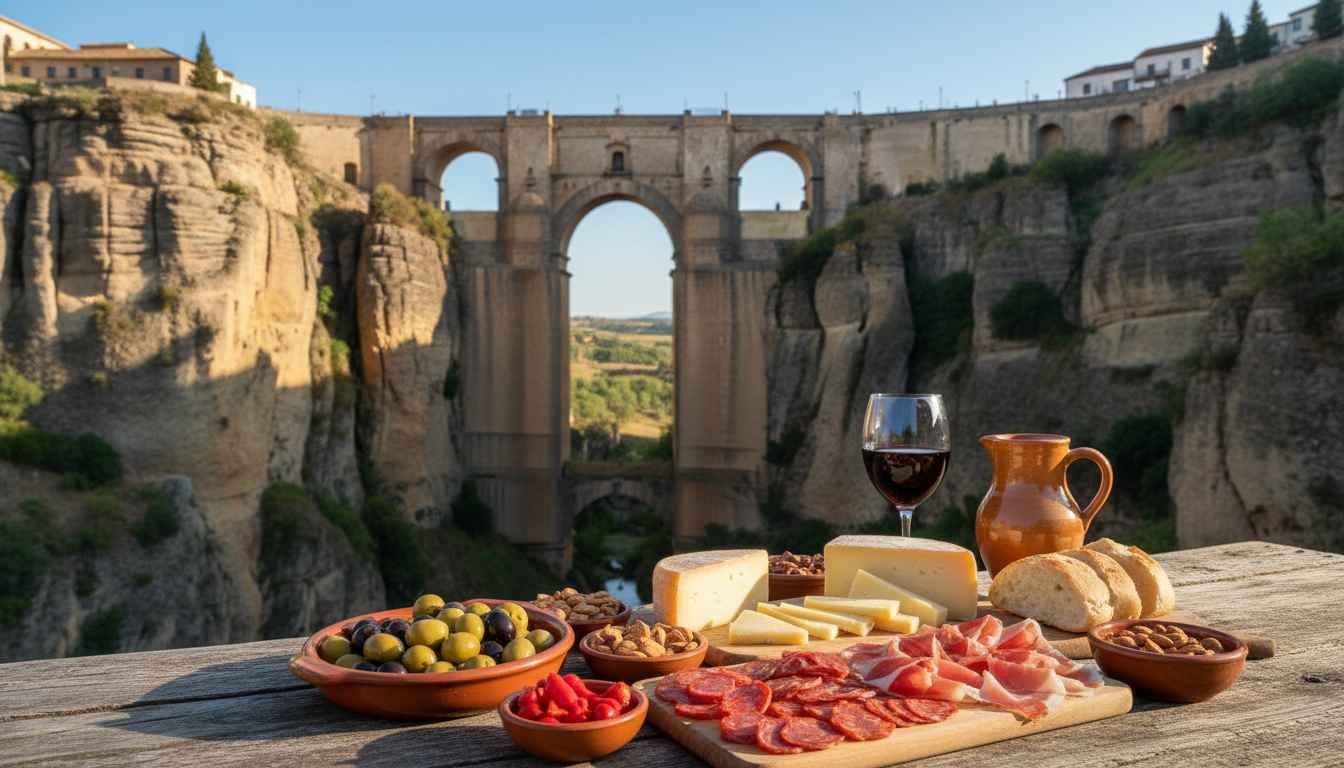
Start at the Puente Nuevo, the “new bridge” that is Ronda’s defining sight. Completed in 1793 after four decades of work, its three arches rise some 120 metres above the floor of El Tajo gorge, joining the old Moorish town with the newer merchant quarter. Walk across it slowly and stop midway to look down at the Guadalevín river far below, then find the viewpoints on either side — the Mirador de Aldehuela and the paths down toward the gorge floor — for the classic photographs. A small interpretation centre inside the bridge explains how it was built and what the gorge has meant to the town. Come at sunset if you can; the stone turns amber and the crowds thin out.
Ronda’s Old Town (La Ciudad)
Cross the bridge into La Ciudad, the old Moorish quarter, and the pace changes completely. Cobbled lanes wind between whitewashed houses, small plazas and wrought-iron balconies. The Mondragón Palace, a former Moorish king’s residence later adapted by Christian rulers, now houses the municipal museum and has a pretty courtyard garden with views over the countryside. Nearby, the Plaza Duquesa de Parcent gathers the town’s oldest buildings in one quiet square: the church of Santa María la Mayor, built over the town’s former mosque, and the elegant town hall. Give yourself an unhurried hour here — the old town rewards wandering rather than ticking off sights.
Plaza de Toros: One of Spain’s Oldest Bullrings
Ronda’s bullring, the Plaza de Toros, was built in 1785 and is one of the oldest and most architecturally significant in Spain. It is where the modern style of bullfighting on foot developed, and its museum tells that story through costumes, posters and paintings. Bullfighting is a controversial tradition, and many visitors come for the architecture and history rather than a corrida — the ring hosts only a handful of fights a year, so a museum visit is the usual way to see inside. The sandstone arena, with its double gallery of Tuscan columns, is beautiful in its own right.
The Arab Baths (Baños Árabes)
Down in the old San Miguel quarter, below the old town, sit the Baños Árabes, among the best-preserved Moorish baths in Spain. Built in the 13th and 14th centuries, the baths follow the Roman pattern of cold, warm and hot rooms, with star-shaped skylights cut into the brick vaults and a roof terrace above. They are a quiet, atmospheric stop that many day-trippers miss, and they give a real sense of everyday life in Moorish Ronda. Allow about 30 to 45 minutes.
Viewpoints and the Alameda del Tajo
For the gentlest views in town, walk the Alameda del Tajo, the leafy promenade along the cliff edge beside the bullring. Benches face west over the Serranía de Ronda mountains, and on a clear day you can see for miles across olive groves and white villages. It is the best place in Ronda for a slow evening stroll, and the balconies along the Paseo de Blas Infante offer the famous vertiginous views straight down the gorge walls. If you are feeling energetic, the trails descending from the town to the gorge floor are steep but rewarding.
Sierra de las Nieves and the White Villages
Ronda is the natural gateway to the Sierra de las Nieves, a rugged mountain area of pine forest, limestone peaks and deep gorges that is excellent for hiking. The nearby white villages are worth a detour too: Setenil de las Bodegas, where houses are built into an overhanging rock, and Grazalema, a pretty mountain village surrounded by walking trails. If you have a car, a half-day loop through the villages turns a Ronda trip into a proper exploration of the Serranía. Without a car, local buses serve the main villages, though services are infrequent, so check times the day before.
Planning Your Visit
Spring and autumn are the best times to visit Ronda, with mild temperatures and fewer crowds than the summer months; July and August can be very hot, so plan sightseeing for the morning and evening. Most visitors arrive by bus or train from Málaga or Seville, or drive — the mountain roads are scenic but winding, so allow extra time. Ronda works well as a day trip, but staying overnight lets you see the gorge at sunset and enjoy the old town after the tour buses leave. If you are exploring more of the country, our guide to the top three places to visit in Spain is a useful starting point for the rest of your itinerary.
Frequently Asked Questions
How many days do you need in Ronda? One full day covers the Puente Nuevo, the old town, the bullring and the Arab Baths comfortably. Two days lets you add a hike in the Sierra de las Nieves or a white-villages drive.
Is Ronda worth a day trip from Seville? Yes. It is roughly two hours by bus or car each way, and the gorge and old town are unlike anything else in Andalusia. Start early to make the most of the day.
Can you walk down into El Tajo gorge? Yes, trails descend from the town to the gorge floor, but they are steep and uneven. Wear proper shoes, carry water and allow at least an hour for the round trip.
Is Ronda suitable for families? Yes. Children enjoy the bridge viewpoints, the bullring museum and the gorge walks, and the old town is compact and easy to explore on foot.
Final Thoughts
Ronda is small enough to see in a day and dramatic enough to remember for years. The Puente Nuevo alone justifies the journey, but it is the combination — gorge, old town, bullring, mountain air — that makes the town special. Arrive early, linger at the viewpoints, and stay for sunset if you can.